The Car-Free Central Park Campaign

T.A. seeks an end to car traffic on Central Park's loop road--24 hours a day, 7 days a week. We are not trying to eliminate driving from the four east-west transverses, which were intended to carry through-traffic as part of the park's original design.

There are two important reasons why the park's loop road must be permanently closed to traffic--now.

First, the road was originally an integral part of the park, a place for recreation only, not for drivers to bypass regular streets to get to Midtown. The presence of car traffic mars the experience of the park for recreational users and poses a serious and ongoing safety and health hazard.

Second, opening the loop road to drivers is only encouraging car travel to and from Midtown and worsening congestion in our city. According to the Regional Plan Association, closing the loop would induce 20 percent to 60 percent of the drivers who now use it to "disappear" from the street grid -- switching to other transportation or significantly modifying their driving patterns. Allowing drivers access to our nation's foremost urban sanctuary is one of the starkest examples of our city's willingness to cater to the "needs" of motorists at the expense of all other values.

The hard work of T.A.'s Car-Free Central Park Committee has resulted in significant incremental gains in the past several years. In fall 2004, the New York City Department of Transportation (DOT) announced a number of reductions in driver access to the park, including the extension of car-free hours from 7 pm at night to 7 am the next morning, the closing of four entrances and one exit, the imposition of an HOV requirement on the West Drive during the morning rush hour and a lowering of the speed limit on the loop drive to 25 mph. In June 2006, the Bloomberg administration initiated a six-month trial closing of portions of the loop drive during the morning and evening rush-hours. This fractional closing was renewed in January 2007.

As welcome as these new restrictions are, they still leave much of the park's bucolic loop road, which has become the park's main recreational attraction, open to drivers for many hours each day. (See current rules) Drivers are in the park precisely when recreational use is at its peak, in the mornings before the work day begins and in the evenings when children and adults flood into the park to run, walk, bicycle or simply sit and enjoy a little nature in the midst of the city.

Goal for 2007: A Car-Free Summer

The Car-Free Central Park Campaign is pursuing a two-pronged strategy to reclaim Central Park from drivers. First, we are gaining the backing of a growing roster of key elected officials and organizations. Click here for a list of officials and organizations that have expressed support for a car-free Central Park. Second, we launched a petition campaign to demonstrate to the city administration the overwhelming public support for a totally car-free park. In October 2005 we reached our goal of 100,000 signatures. We know of no other grassroots campaign in New York City's history that has achieved this level of support. Add your name to the petition online today!

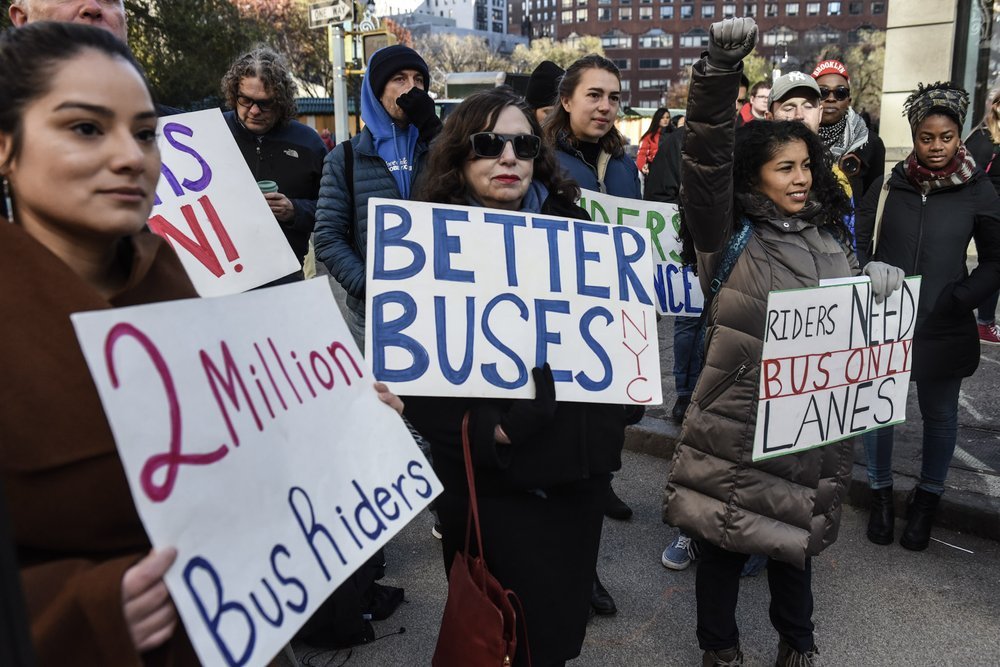
The two prongs came together in March 2006 on the steps of City Hall when hundreds of rallying supporters formally announced the signature total and called for passage of a City Council bill that would create a trial closing of Central Park to traffic in summer 2006. Although the bill gained broad support among council members, it was set aside in favor of the Mayor's fractional closing (described above). T.A. expects the Car-Free Summer bill to be re-introduced in spring 2007 and that, with the enthusiastic support of thousands of New Yorkers, this time it will be put to a vote and become law. When it does, New Yorkers will experience for the first time in living memory the refuge that Central Park's creators intended it to be.

Why a Car-Free Central Park?

Central Park was created 150 years ago as a refuge from the street noise and bustle of the surrounding city. Tragically, the park's status as a retreat from the urban din is compromised every weekday by the presence of drivers on the loop drive. Families with strollers, runners, bicyclists and tourists seeking respite must jockey for space in a narrow "recreational lane" inches away from the car traffic they are trying to escape. (See "Close the Loop," The New York Times, May 7, 2006.) As more people take up fitness sports, there is constant jockeying for position among the lane's users and increasingly frequent collisions between the cars and recreational users. (See what It's Like to Be Hit by a Car in Central Park )

In Brooklyn's Prospect Park, which similarly allows drivers on its loop drive, a woman cyclist was killed by a speeding van driver in summer 1997. We fear that it is only a matter of time before a fatal accident occurs in Central Park.

This is hardly what Central Park's designers, Frederick Law Olmsted and Calvert Vaux, had in mind when they created their haven from the "confinement, bustle, and monotonous street-division of the city." Worried that "a turbid stream of coarse traffic" would disrupt the park's tranquility, they intentionally sank the transverse roads eight feet beneath the Park's surface. But Olmsted and Vaux had no idea what was in store for their bucolic Loop Drive.

Car drivers were first allowed in the Park in 1899, by permit only, to join the afternoon parade of carriages that had been a fixture in the Park for the previous 30 years. But as the automobile became increasingly common, its drivers cared less and less about taking their place in this parade and more and more about using the park solely to bypass congestion on adjacent city streets. (See "Ban the Cars! A Historical Plea." The New York Times, May 15, 1994.)

Today, the loop drive's primary purpose for 7 to 12 prime hours of every weekday is as a shortcut for a small number of drivers. Those people who come to the park to relax or exercise are herded into a crowded recreation lane and exposed to dangerous drivers.

Getting drivers out of the Central Park Loop Drive is not a huge or complicated task. Most of the car traffic on the loop road is made up of cab and livery car drivers, whose passengers have easy access to alternative driving routes and to subways and buses. All of the motorists in the park each hour could easily fit into one subway train. But while there are alternative routes for drivers, there is no alternative to Central Park. If we can't escape from the noise and insult of car traffic in Central Park, where can we go?

What We Believe:

  • New Yorkers deserve at least one place where they can escape car traffic entirely.
  • New Yorkers deserve one place where they can run, bike, rollerblade or simply stroll without inhaling direct car exhaust.
  • New Yorkers deserve one place where they can hear bird calls rather than car horns.
  • New Yorkers deserve one place where they need not fear being killed or maimed by 3,000 pounds of steel and glass.
  • Central Park was created to be that place.

What we want

We are calling for an end to driving on Central Park's Loop Drive, 24 hours a day, 7 days a week. Then, and only then, will Central Park be the refuge and sanctuary that its creators intended. We are not trying to eliminate driving from the four east-west transverses, which were intended for cross town vehicle traffic as part of the park's original design.

Whose Decision Is It?

The decision to make Central Park car-free rests with the mayor. However, the mayor's decision will be heavily influenced by the City Department of Transportation (DOT), which owns the roads in the park. It is possible that the DOT Commissioner alone might be willing to extend or expand car-free hours. In 1992, then-DOT Commissioner Lou Riccio extended car-free weekday periods to 11 months of the year at T.A.'s request.

However, no decision on driving in the park will be made without the concurrence of four key players: New York City's mayor, the Parks and DOT commissioners and the Manhattan Borough President. Car-free park advocates have the strong support of Manhattan's new Borough President, Scott Stringer. The bottom line is that, if these key officials come to believe that there is overwhelming support for a car-free park, they will act to ban driving. It's as simple as that. Our conversations with tens of thousands of park users have convinced us that there is already overwhelming support for a car-free park and that this support is growing daily. We need your help to convince our elected officials of this.

categories [ ]